Fragrance Oils

Fragrance Oils

Fragrance is at the heart of every great candle and diffuser, and our fragrance oils are crafted to perform beautifully. Created by expert perfumers in the UK and France, each oil is tested in our in-house lab to ensure consistent quality, safety and a beautiful scent throw.

Trusted by professional makers and hobbyists alike, our collection of luxury candle scents and diffuser fragrance oils gives you the building blocks to create products that stand out. Explore the range and find the scents that will define your next creation.

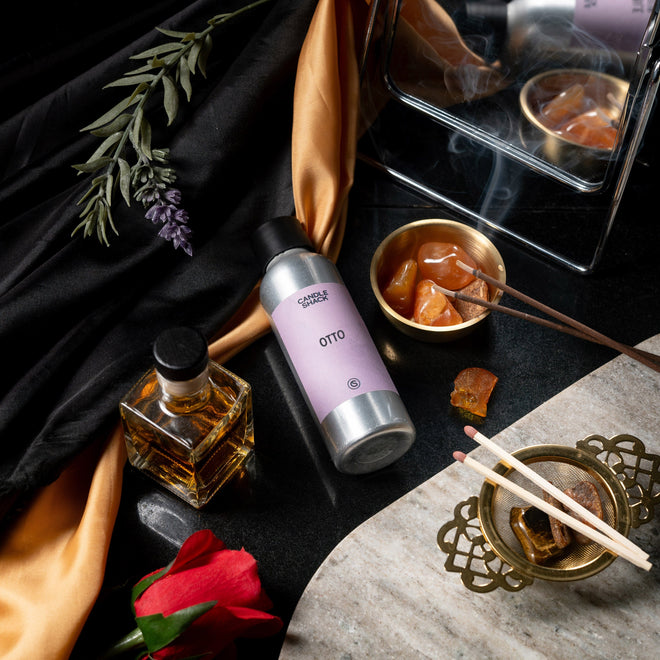
Otto Fragrance Oil

From 1,59 € exc. VAT

Midnight Amber Fragrance Oil

From 6,96 € exc. VAT

Nice Bergamote Fragrance Oil

From 9,68 € exc. VAT

Fragrance Families

Solaris Blanc Fragrance Oil (New Mod)

From 5,49 € exc. VAT

Candle & Diffuser Recipes

Cashmeran Fragrance Oil

From 1,59 € exc. VAT

Lemongrass & Ginger Reed Fragrance Oil

From 5,69 € exc. VAT

Candy Cane Fragrance Oil

From 5,69 € exc. VAT

Christmas Wish (New Mod)

From 6,87 € exc. VAT

Vanilla & Cinders Fragrance Oil

From 6,21 € exc. VAT

Amalfi Bleu Fragrance Oil

From 7,56 € exc. VAT

Amara Sol Fragrance Oil

From 1,59 € exc. VAT

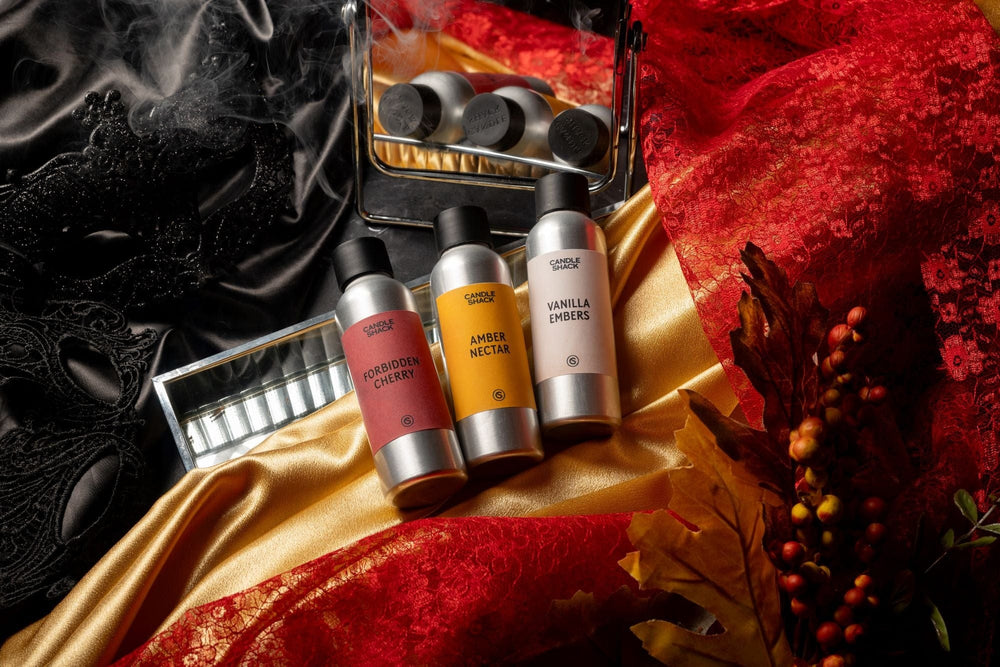
Amber Nectar Fragrance Oil

From 5,69 € exc. VAT

Amber Noir Fragrance Oil

From 8,06 € exc. VAT

Fragrance FAQ's

What is the difference between a fragrance oil and an essential oil for candle making?
Fragrance oils are the better choice for candle making. Unlike essential oils, which are natural plant extracts that can degrade at candle-making temperatures, fragrance oils are formulated to withstand heat, mix reliably with wax, and deliver consistent scent throw across a full burn. They also come with IFRA certificates and Safety Data Sheets, which you need to make CLP-compliant products for sale.
How much fragrance oil should I add to candle wax?
For most container waxes, a fragrance load of 6-10% by weight of wax is the practical working range, with most lab-tested recipes landing at 8-10%. The ceiling is set by two things: the wax's stated maximum load, which you should never exceed as excess fragrance causes pooling, sweating and safety issues, and the IFRA maximum for that specific fragrance in the candle application category. Adding more than the wax can bind does not improve throw - it causes problems.
Which fragrance oils work best in natural waxes like soy and rapeseed?
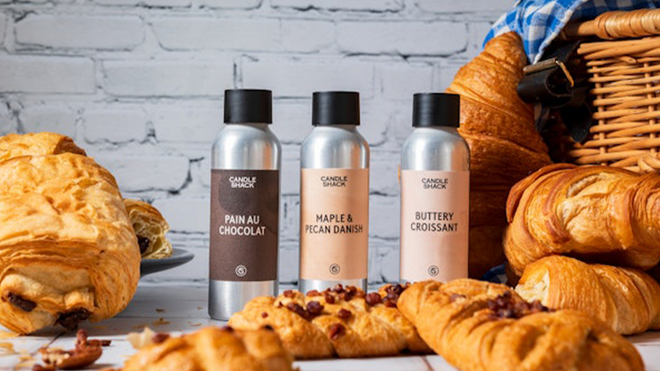
Most fragrance oils perform well in natural waxes, but throw strength varies by fragrance composition. In Candle Shack's lab-tested recipes using RCX (rapeseed and coconut wax) and EU Golden Wax 464 (soy), fragrances that achieved scent ratings of 9-10 out of 10 include Gingerbread, Luscious Vanilla, Pain au Chocolat, Black Pomegranate, Blackcurrant and Tuberose, and Cinnamon, Frankincense and Cedarwood. The Blueprints range is formulated for strong hot throw in natural waxes.
Why does my candle smell strong cold but weak when it is burning?
Weak hot throw despite good cold throw is almost always a process issue, not a fragrance quality issue. The three most common causes are: fragrance added at too high a temperature, which drives off volatile top notes before the wax sets; fragrance load below the wax's optimal range; or a wick too small to generate the melt pool needed to vaporise the scent. Work through these in order before changing the fragrance itself.
What temperature should I add fragrance oil to candle wax?
Add fragrance oil once the melted wax has cooled to the manufacturer's recommended addition temperature, which is often stated on the wax product page. Adding too hot drives off lighter scent notes and reduces hot throw; adding too cool risks poor mixing and uneven distribution. Stir thoroughly for at least a full minute after adding before pouring.
Do I need IFRA certificates and Safety Data Sheets for fragrance oils?
Yes, if you are selling finished products. The IFRA certificate tells you the maximum permitted usage level for each fragrance in each application category - candles, reed diffusers and wax melts all have stated limits. The Safety Data Sheet is the input you need to calculate your CLP label obligations. Both documents are available on each fragrance product page at Candle Shack.
Can I use the same fragrance oil in candles, wax melts and reed diffusers?
The same fragrance oil can usually be used across product types, but the IFRA permitted usage level differs between applications. The percentage that is safe in a candle may not be the same as for a reed diffuser or wax melt - and for some fragrance components the diffuser limit is substantially lower. Always check the IFRA certificate for the specific application category you are making, and run CLP calculations separately for each product type. Some fragrance oils are application specific, for example, suitable for reed diffusers, but not candles.

Blog Featured Recipes

30cl Candle Recipe, Rising Sun in EU 464 - CL14 Wick
30cl Candle Recipe, Rhubarb & Strawberry in Apricot & Coconut Wax
9cl Candle Recipe, Solaris Blanc in Apricot & Coconut Blend (NEW MOD)